

The Met Brings Art From New York To VR In Every Way
New York's Metropolitan Museum Of Art explores the foundations of good virtual reality.
The Metropolitan Museum of Art in New York is exploring virtual reality in all directions.
My son carries in his Roblox account some armor for his avatar that he essentially scanned in a few years ago at The Met as he was exploring the museum on foot with iPhone in hand. Meanwhile, more recently, I gathered for a movie night in Vision Pro headsets with my friend and before the movie started I shared the object I had floating in my virtual space and then handed it to him across our realities.
The “slit gong” is one of the largest musical instruments and I have a replica of it for my virtual space that I pulled straight out of The Met website with my augmented virtuality headset using its AR functionality.
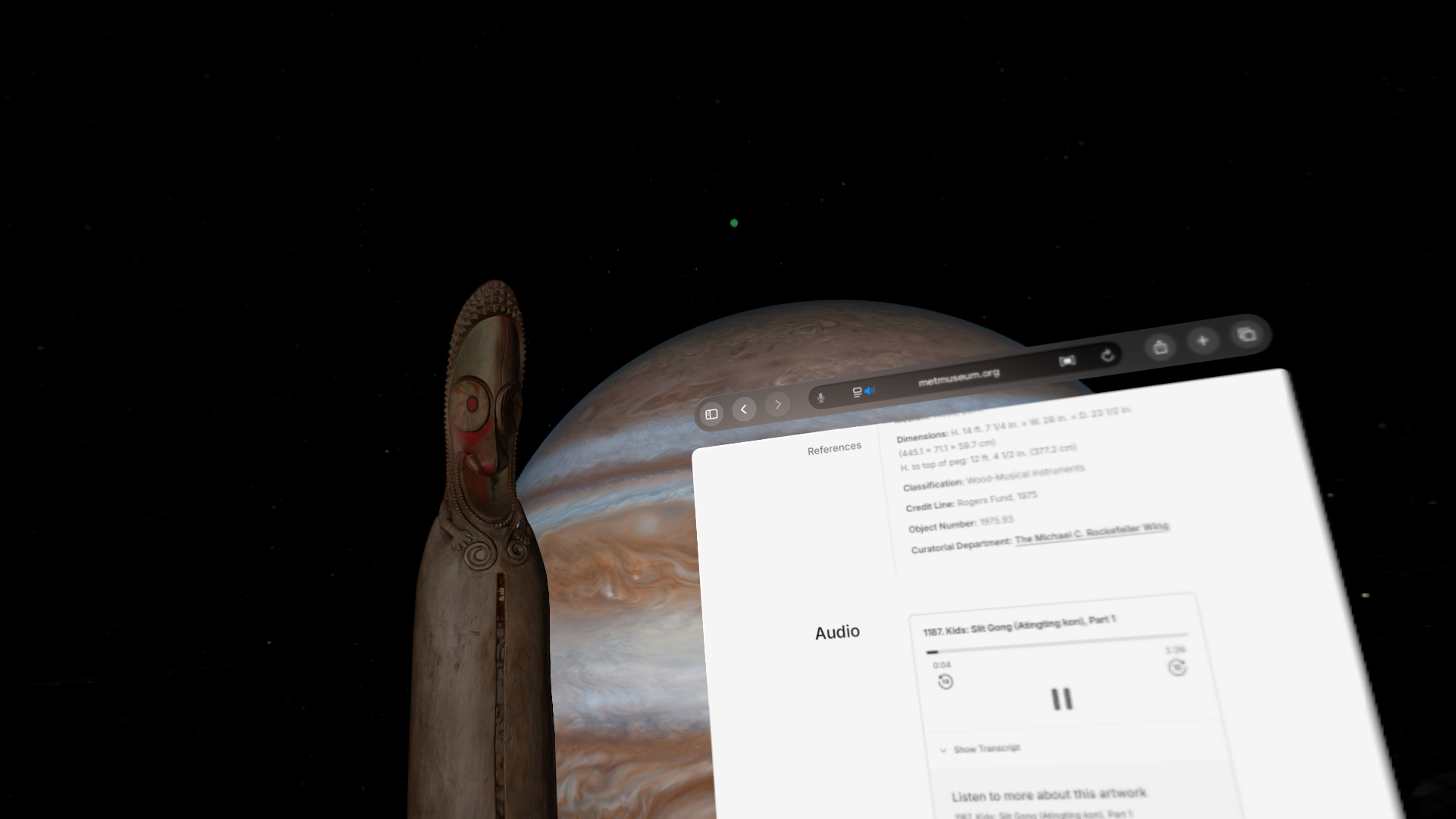
The technical underpinnings of everything described above dates to 2023 and 2020, respectively. Experiencing either in 2026 represents two extremes of virtual reality.
At one end of VR there is bringing yourself to a physical museum to scan objects on foot with an iPhone that you can experience later in a headset, and at the other end the art literally comes to you in your headset, for perusal at a place, time, and with people of your choosing. My friend and I weren’t even in the same physical location in our Vision Pro headsets, yet The Met’s art was able to travel from its physical confines through the open Web and become the centerpiece of our shared reality for a few minutes.
“We think the museum is relevant for everyone, and we also know that not everyone is comfortable visiting art museums (or they’re simply not able to). All of our emerging technology projects are about connection: reaching our existing audiences in new ways as well as reaching brand-new audiences, whether that’s casual gamers, fashion enthusiasts, or children and families,” Brett Renfer, Senior Project Manager, Emerging Technology, wrote over email. “We hope that new audiences can feel the awe that comes with experiencing art across time, in a way that feels relevant and approachable. VR and the immersive web are perfect extensions of this ethos, especially in the ways that visitors can feel a sense of presence and sense of place.”
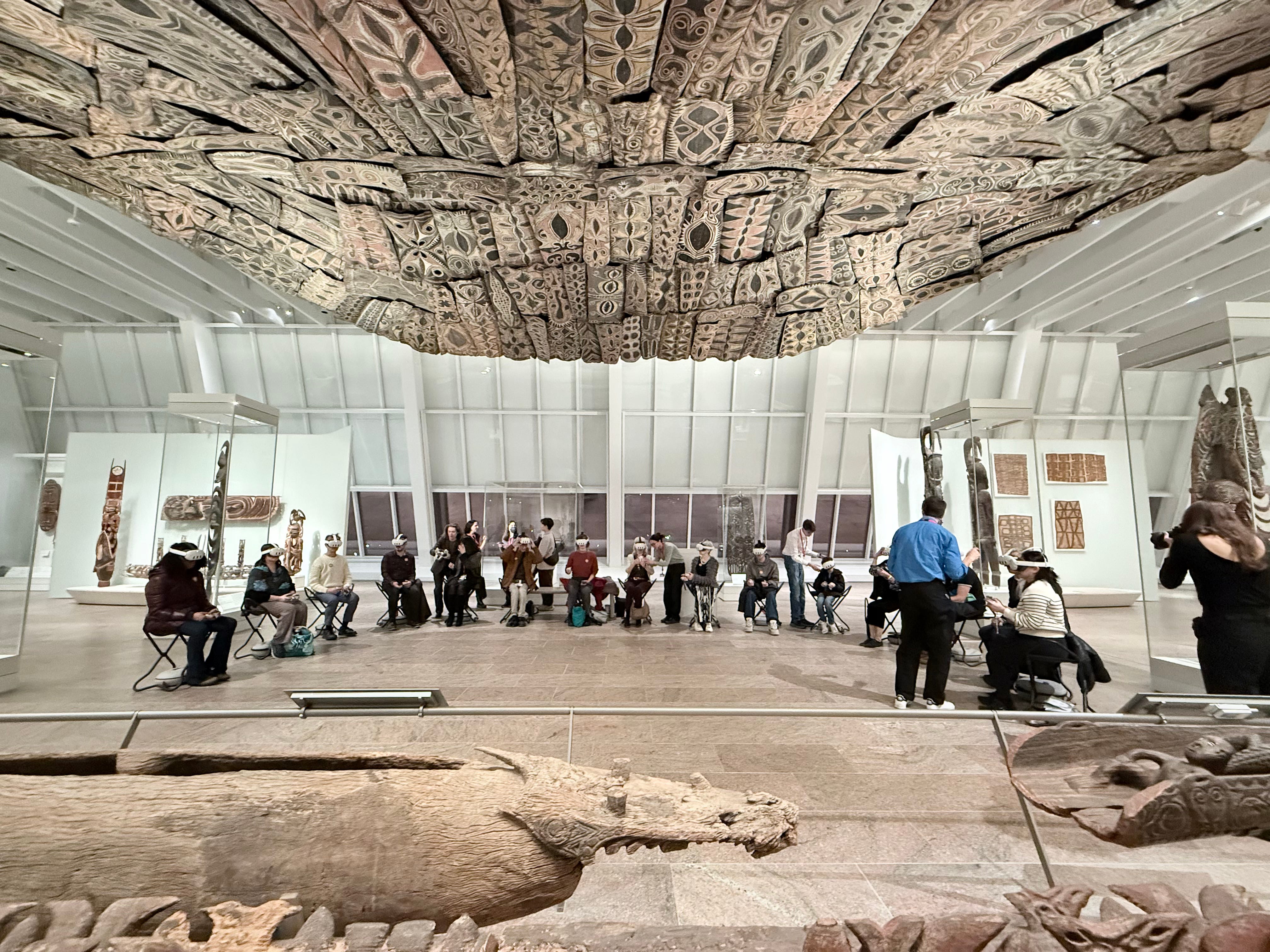
In between these two extremes was the photo above experienced by visitors to the museum in the Atopia app on Quest 3. The software featured smooth locomotion with the stick on the left controller and, simultaneously, teleport locomotion with snap turning on the right stick. I suggested after my demo that future demos of VR like this at The Met simply leave the left controller out of the demo. Patrons to the museum, many who have likely never experienced VR before, would be better off teleporting only than trying to navigate a virtual world and feeling a continuous mismatch between what their body feels and their eyes see.
“As you saw in Oceania, the spaces are not really about replicating an on-site visit; instead, they’re about doing things you can’t in a museum, in a way that enriches future experiences with art,” Renfer wrote. “Maybe you’ll come visit us with a new appreciation for the Arts of the Pacific, or maybe you’ll visit another museum/gallery/online exhibit and just feel a bit more comfortable or welcome.”
VR headsets today are all “cursed objects”, as outlined in my recent podcast discussion with Doug North Cook, in that they grant incredible powers at enormous costs. The Vision Pro is held back by weight and price while the Quest 3’s analog stick-based locomotion systems can be overwhelming to grasp for the billions of people who haven’t experienced VR yet.
“These projects grew out of our iterative approach to emerging technology, from our focused AR Quick Look Zemi Figure to our XR deep-dive into Greek Polychromy to in-gallery pilots to the more robust Atopia project,” Renfer wrote.
The Met told me they have just over 200 scanned objects with 138 of them publicly available. They scan about 70 works annually but the number is growing each year. You can find more about The Met’s efforts in VR on its website.