

The MacBook Pro and iPhone first shipped in 2006 and 2007. 20 years on, Apple is starting to align its mobile products with custom silicon to hit every possible price for a compelling personal computer.
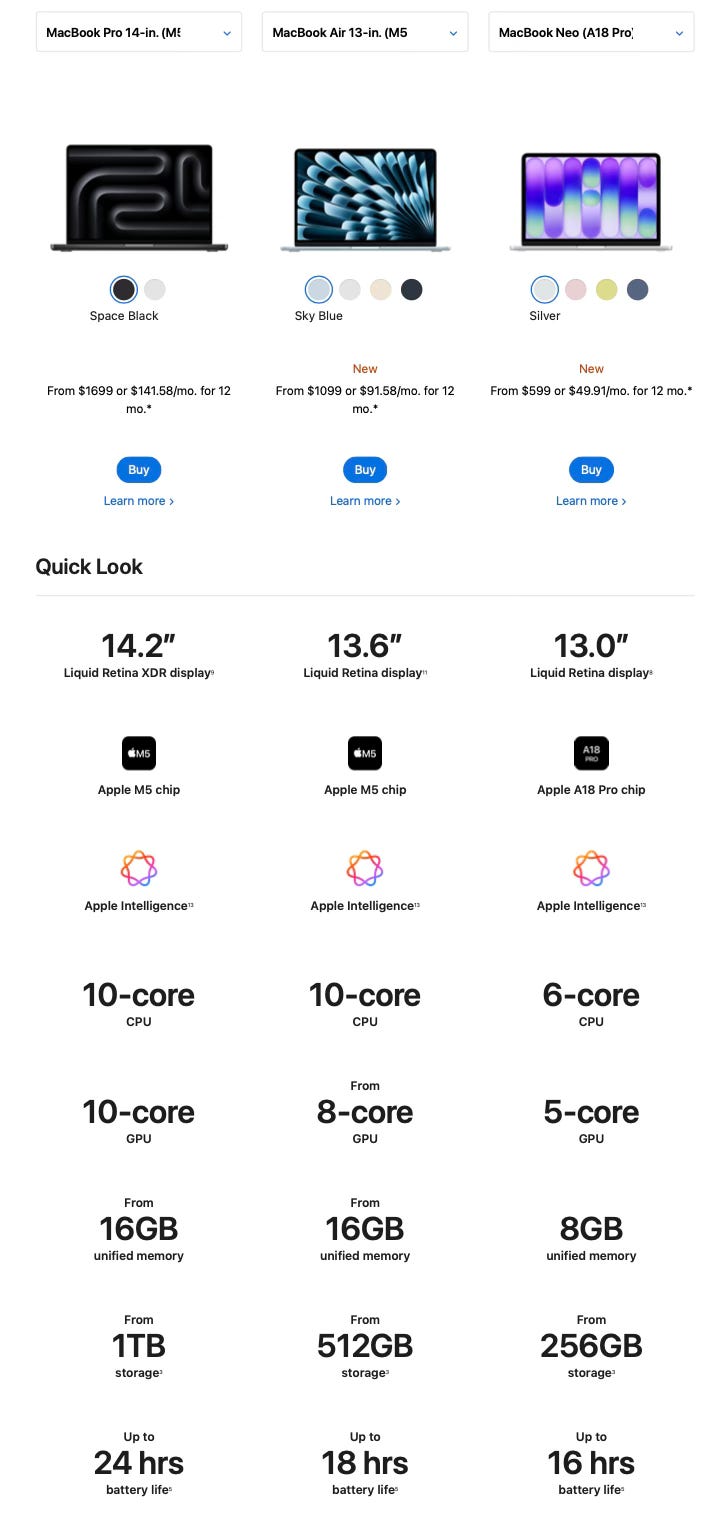
In both the Vision Pro and MacBook Pro the devices carry the 5th generation of Apple’s own silicon in its highest-end portable products. MacBook Pro laptops today range $1700 to $7349 varied by screen size and quality, data storage, and memory.
Here are the price ranges of portable personal computers carrying Apple silicon:
MacBook Pro - $1700-$7350
MacBook Air - $1100-$2900
MacBook Neo - $600-$700
What do you want to do with your computer? How long do you expect it to do what you want? Where do you expect to take it? Answering those questions is how buying decisions are made and Apple’s product designs differentiate in style, size, and functionality to help those decisions get made. Do you need 2 terabytes of storage or 96 gigabytes of RAM to complete your projects and run the software you want? Or will 256 gigabytes of storage and 8 gigabytes of RAM do the job?
Now add the physical dimensions of those device categories to these comparisons:
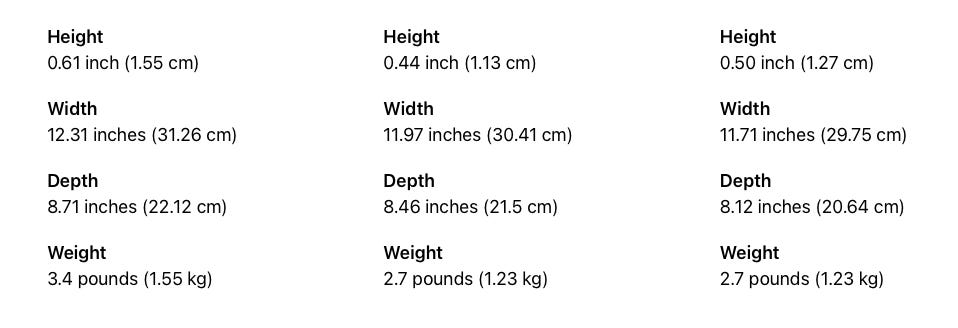
Here are some of the takeaways from these comparisons:
The Pro line features maximum customizability to service the widely varying needs of people who require extreme computing power and are willing to deal with extra weight in exchange for features like extraordinary battery life or beefing the system up with RAM for the most demanding tasks.
The Air line differentiates by being significantly lighter while still including some upgradeability in storage, chipset, and memory. The Air begins at a much lower price while the highest priced MacBook Air is a fraction of the highest priced Pro.
The new Neo line starts at an extraordinarily low price. The weight it carries is exactly the same as the Air starting with less RAM and a lower starting point for storage.
Accessing The Untapped Sim & VR Gaming Market
Apple headset adoption is held back by the following three factors in this order:
Weight
Content
Cost
Cost and weight are closely related in headset design. Content is addressed largely through additional software and experiences accessible in Apple headsets, but also by lowering cost.
The more people who can afford the hardware the larger the potential market. VR software faces the age-old chicken and egg problem that plagued immersive content for decades, because content won’t be made for an audience that isn’t there and an audience won’t buy VR hardware without content to enjoy.
Interest in building for immersive hardware is at one of its lowest points because Meta spent the last half decade stunting the market with the underpowered Quest platform and slop of Horizon Worlds layered on top, with both layers pushing high-end simulations from a PC into a tertiary role, whether Microsoft Flight Simulator or Half-Life: Alyx. For example, multiple developers found themselves over the last five years optimizing the Quest edition of their game at the cost of the PC version to leave both audiences unsatisfied with the end product — Quest users with a barely performant game lacking dynamic lighting with PC VR users encountering bugs that were not addressed before release.
Vision products launched by co-opting the existing useful iPad app library as a background surface for the incubation of spatial ideas from developers. Apple today prepares foveated streaming for high-end simulation with huge opportunity available in the adoption of standardized spatial controllers.
After more than two years of VisionOS, Apple’s platform is ready to invite a lot of top tier immersive content into its ecosystem in standalone, streaming and with combinations of the two.
What’s holding back its arrival is weight and cost.
Vision Extension: Pro To Air To Neo
Laptops and Apple headsets divide components into two pieces. The battery in a Mac laptop and an Apple Vision headset are both held in spots where the weight isn’t noticed during use. From here, how does Apple differentiate future devices from the Pro line?
To cut weight and differentiate, a hypothetical Vision Air headset could still use the M5 processors and drop the following components from a mid-tier product:
EyeSight: The external display on Vision Pro provides the illusion of eyes to connect with people in the room and help with capturing Persona avatars. Neither of those features are necessary in a product designed for movie watching or long-term solo simulation.
Face tracking and Persona avatars: Apple Vision products can still feature the same security and core interaction features with only eye tracking. FaceTime audio calls are the ideal way to connect with others and share your view when long-term immersion in a space is the ultimate goal.
Built-in audio: If the loss of weight and benefits of better headset balance can be found to increase overall use, then AirPods, HomePods, iPhones worn on a strap, and even streaming PCs or Macs can all be co-opted as audio output. Built in audio in Vision Pro is a nice-to-have feature, but not a necessary one for a hypothetical scenario where your PC is sending bass to a vibrating racing seat with 7 audio channels of booming sound positioned around the room. Bigscreen Beyond, for example, makes this same design choice. An included USB-C port on the side of the head instead of a $300 developer strap can be used for simple wired earbuds. Even better, a low latency connection to AirPods can deliver fantastic audio while making space for components to move off the front of the face.
Everything else about the Vision Pro experience is something I wouldn’t want to see compromised. The OLED displays that self-adjust to eye distance with eye tracking provide the very core of Apple’s interaction scheme for Vision products and, combined with its high resolutions, are what allow a product like Retrocade from Resolution Games to keep players immersed across long play sessions.
Using the Vision Pro’s display architecture as the foundation of a second headset line offered at lower price can sell in higher volume and be more comfortable to wear for longer periods. Now we can begin to work out from here what Pro, Air and Neo Vision products might entail for spatial computing over multiple products and another decade of improvements:
Vision Pro: From $3500 to $10000 can focus on spatial media creation from apps to videos to performance capture through on-board sensors, with upgrade options possible for display improvements, processors, and storage. I would spend a large portion of my income on varifocal optics and super-vision as upgrades in Apple ultra high-end spatial computers.
Vision Air: From $2000 to $3200 can focus on immersive entertainment and app media creation with upgrade options in processors and storage.
Vision Neo: From $1000 to $2000 can focus on mass market spatial computing with an alternative display and processor architecture and limited upgrade options in storage.
The task for Apple ahead is the same as with iPods, then iPhones, and now MacBooks. Take gains from vertical integration of its technologies and hone in on what people want at prices that make sense. Apple’s AirPods filter everything you hear and Vision products filter what you see. The Pro’s imperfect open ear solution makes for a complete product and spatial computer but it’s a tremendous amount of weight and cost that makes it impossible for the vast majority of developers to justify a purchase. That can begin to change with a second product line that distributes less weight and costs less.