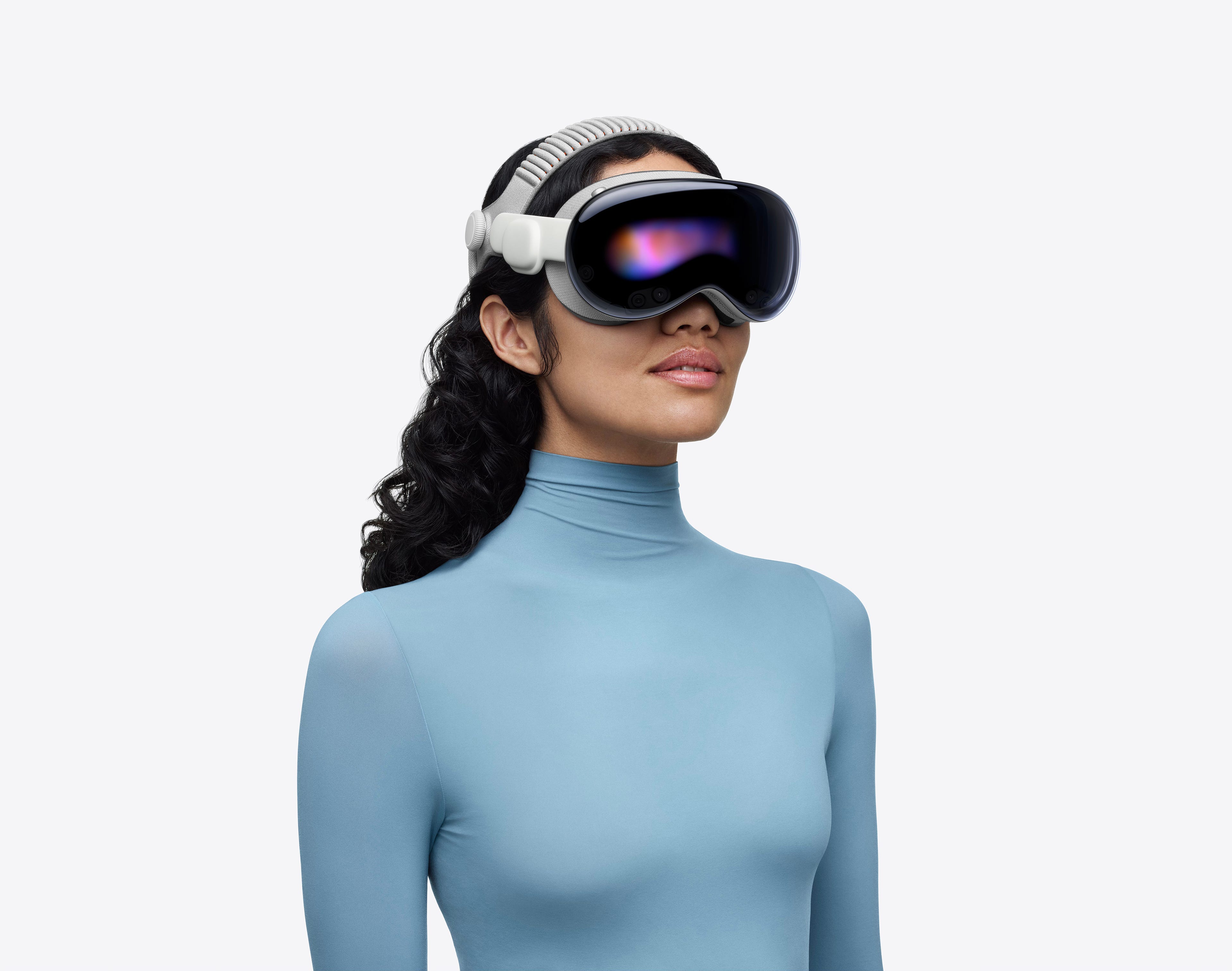
Apple Vision Pro Is Primarily An Augmented Virtuality Headset
There are four distinct regions of interaction inside Apple Vision Pro.
You can see them here in this chart from a seminal research paper published in 1994:
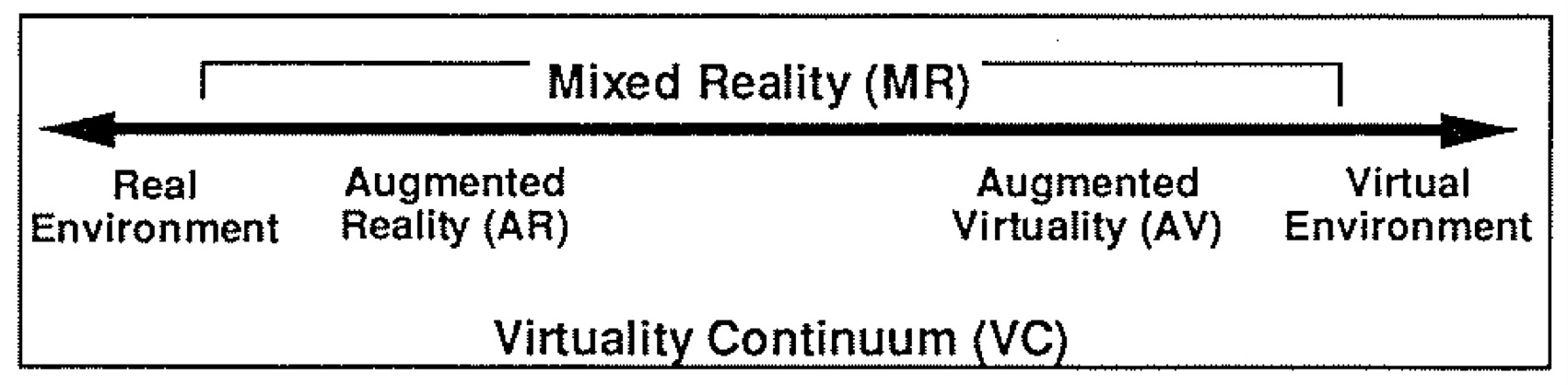
The first region presented by the visionOS operating system that you can see following the opaque screen turning on is a purely real environment.
The second region is accessed by clicking a button on the headset to activate augmented reality with a menu of floating apps to choose from presented inside your physical environment.
The third region is accessed by using the dial on the headset to change the environment from physical to virtual. This is augmented virtuality (AV or Apple Vision) when you still see your actual arms in front of you interacting with digital content.
You can enter region four by simply placing your arms down at your side. Your presence is held there in a virtual environment by the wide field of view optics of the headset. If you grab a gamepad, point your eyes at the app Retrocade and pinch your fingers together, you’ll transport to an arcade from 1989 and your presence will be held there in that fully virtual environment for as long as you like.
Since the 1990s, this final destination is understood to have been provided by a VR headset. That’s what the black screen was as the start of this journey across mixed reality and it is the necessary technology to access all regions of the Virtuality Continuum.
Dead Ends
Research literature as well as startup founders and technical managers with delusions of grandeur have attempted an alternative path in optics for about as long as VR headsets have been developed.
Directly see-through optics with digital overlays in low-weight AR glasses provide so many logical benefits that companies like Magic Leap raised billions on the idea. Magic Leap even shipped two generations of product extremely similar to Apple Vision Pro. Even though they have completely different optical paths, these headsets are architected in similar ways by deploying key components to a side-worn pack rather than head-worn weight. Despite the failure of Magic Leap to find an audience of any kind for its products, Meta finds themselves shipping one-eyed pirate optics toward the same idea in the Ray-Ban Display Glasses as their managers try to deliver a platform Mark Zuckerberg can use to build AI bootstrapped from the behavior of not just its users — but the other people its users observe while walking in public.
Look at the rise of spatial computing through a lens of 40 years of human history, research, and repeated failures to find product market fit. Apple hired some of the actual geniuses who worked on Magic Leap once that effort ran out of money, and used those people to strengthen their own learnings about this space.
When I look at the shrewd choices made in Magic Leap and Apple Vision Pro hardware what I see is the acknowledgment that the biggest thing holding back eyewear of any kind is the weight you feel on your forehead during use. You have a choice here — the same one others have faced for at least 20 years — to hop on a hype train or take a deep look at the science of comfort and presence.
It is my sincere belief Vision Pro is the heaviest VR headset Apple will ever ship. Until Apple ships a second design that spans the entire Virtuality Continuum (rather than just using an upgraded chip) even close watchers of this technology will be unable to accept the overall direction of personal computing in this century.
Is the dead end here virtual reality technology shipping in 2026 from Nintendo, Apple, Google, Samsung and (if demand for AI datacenters doesn’t kill the Steam Frame) Valve?
Or is it Magic Leap, HoloLens, Vuzix, Xreal and others with limited field of view systems that cannot provide presence to span the entire continuum of experience?
Please consider becoming a paying subscriber to support Good Virtual Reality.