


Head-mounted displays come in a lot of different configurations and not all of them deliver VR. Still, the elements that make VR experiences worth having can be better understood when looking at related technologies.
That’s how I ended up talking with Jamie Lockwood at HMDmd. The company makes head-mounted stereoscopic displays with high resolution microdisplays and open peripheries designed specifically for use in medical settings. The systems allow doctors to see with depth in detail inside the human body while still able to see the operating room through the periphery, and the low-weight balanced design aims to be wearable for a lengthy multi-hour procedure.
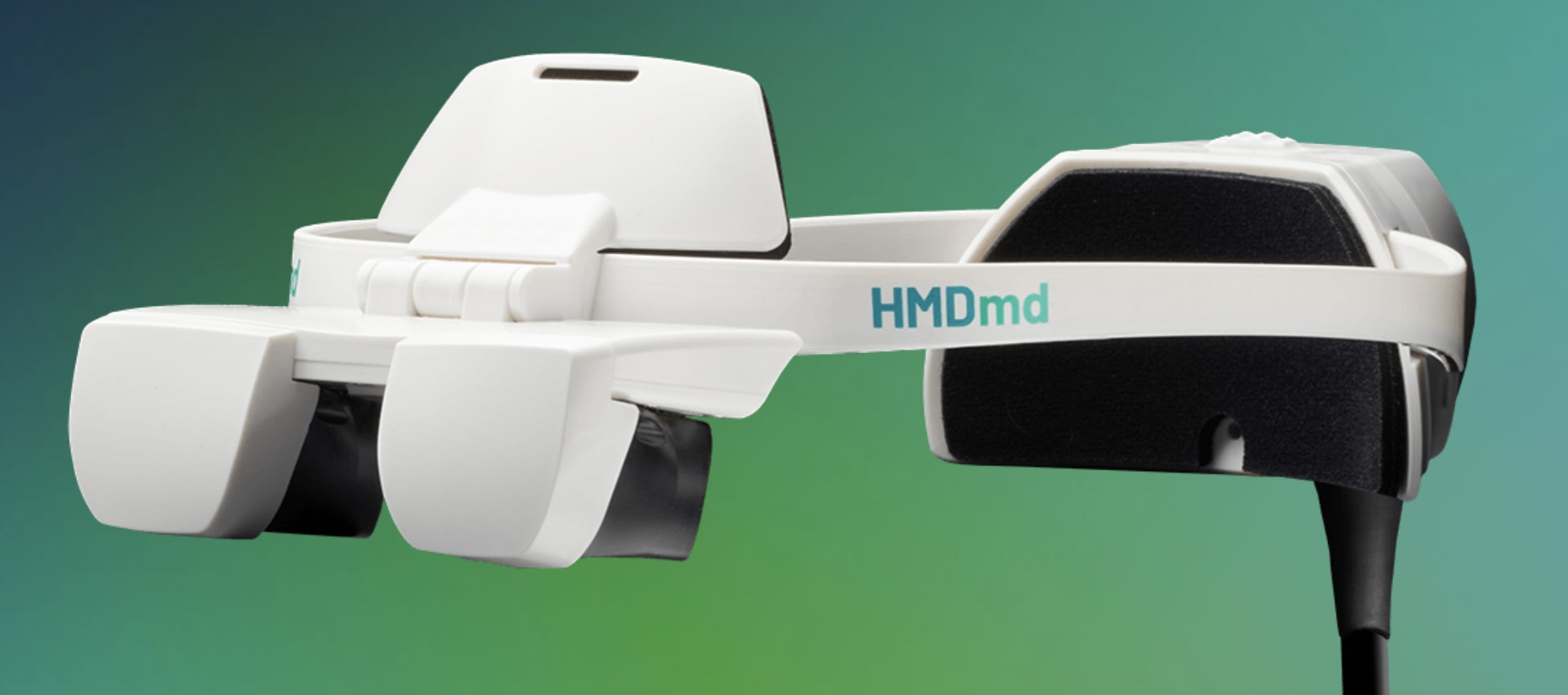
I spoke with Lockwood for for around 25 minutes and edited the conversation down with Riverside to under 20 minutes with focused questions around the value of stereoscopy — the key tech shared with VR headsets — and the overall trends he’s seeing in head-mounted displays.
“The trend that we’re really excited about is for years surgeons have used computer generated images for surgical navigation to put in instruments or to or to plan trajectories,” Lockwood said. “The future is the fusion…of surgical navigation guidance on top of real time 3D anatomical video….but nobody’s cracked the code on how to do this real time with zero latency on 3D video.”


