

The core benefit of a VR headset is the ability to transport anywhere with total focus.
Over the last 12 years I’ve owned and adopted into regular use as much as reasonably possible DK2, Gear VR, Vive, Rift, Daydream, Oculus Go, PSVR, Index, Rift S, Quest, Reverb, Quest 2, PSVR 2, Quest 3, Quest 3S, Bigscreen Beyond 2 and Apple Vision Pro, among other headsets.
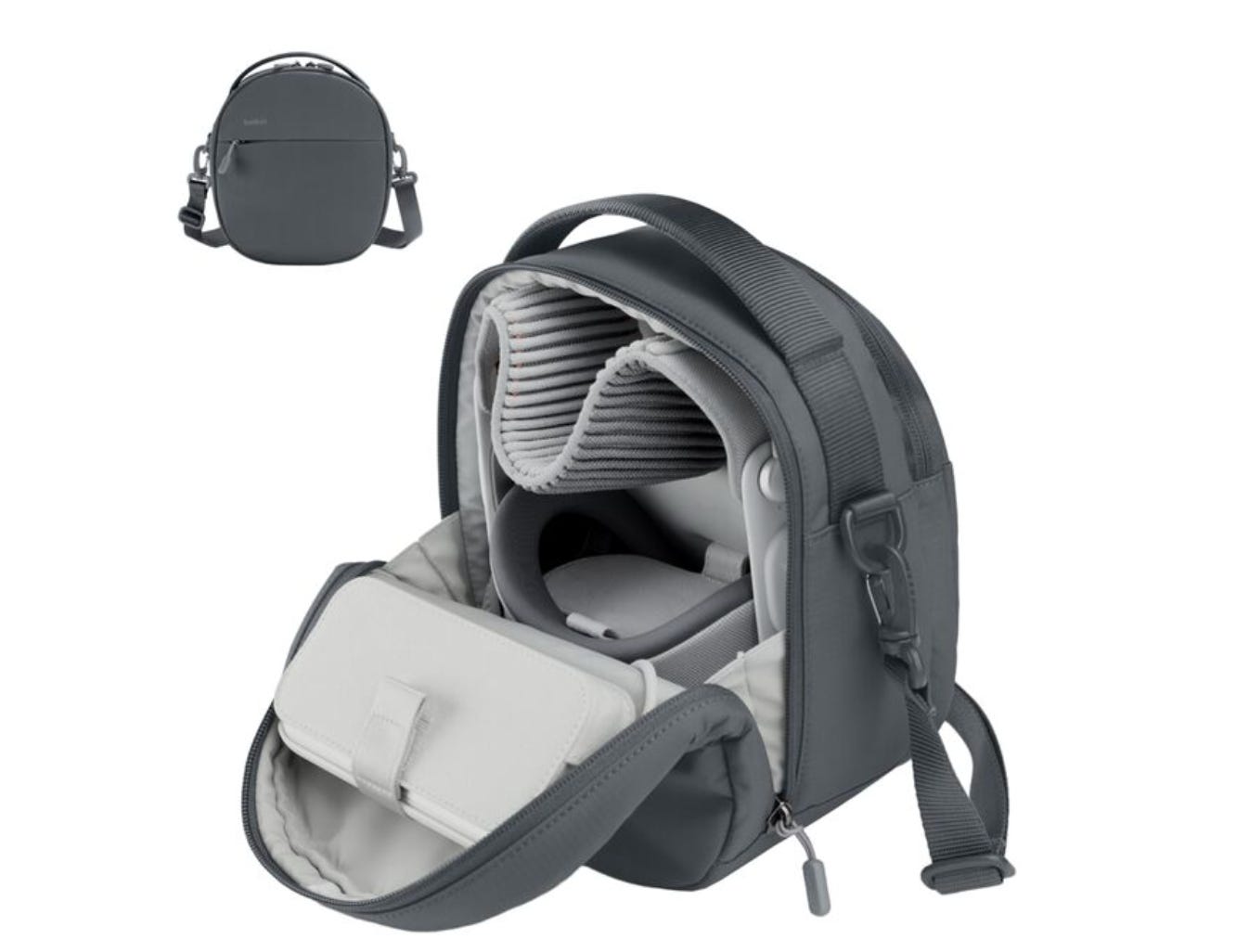
I harvested PSVR 2’s controllers for use with Vision Pro and recently gifted Sony’s headset to a friend after it sat unused for over a year. The Index sat on a shelf unused for years but its controllers from 2019 remain in use when I take Bigscreen Beyond 2 out of its VRChat storage can. I gifted Quest 2 to one of my kids who uses it infrequently. I use Quest 3 when a developer has something interesting to test. Vision Pro is in a protective carry case with my prescription lenses magnetically attached to the headset. I use the Apple headset on a weekly basis to watch an occasional movie, do a FaceTime call, or try something interesting. When I travel by plane I always take Vision Pro for its ability to whisk me away from cramped transportation to a calming escape on Jupiter.
Trying to adopt VR headsets as wearable personal computers over roughly 1/4 of my life reveals a number of things about their use which are generally overlooked.
How VR Headsets Are Like Cameras
Photojournalists learn a trick of the trade that’s extremely relevant to VR headsets. They screw polarizing filters onto all their expensive lenses. These lenses help reduce glare in photographs. The main reason they do this, however, is to protect their expensive hardware from damage and dust. Replacing or cleaning the inexpensive filter is much quicker, easier and cheaper than repairing the expensive glass of their lenses. If your job is to move quickly through a crowd of protesters with a camera hanging off a strap at your side the chances are high that filter will collect dust or collide with a sharp object. Snapping an important moment of action requires abandoning the idea of a lens cap and, if the filter cracks rather than the lens itself, you can replace it quickly with another from the bag. You don’t miss the action, expose lenses to the environment, or leave the field to go to a camera shop and spend hundreds on a repair that could take weeks.
The digital SLR camera won’t reveal dust until reviewing photos after they’re taken. In a headset, you’ll immediately see grease, skin flakes, or dust in your field of vision even if you might not be able to consciously identify exactly what’s wrong with your view.
The lesson here? The interior lenses of a VR headset should be thought of in the same way photojournalists think about the lenses of their cameras. It costs hundreds and takes weeks to fix something wrong with a VR headset’s internal optics. You can save yourself tremendous effort in repair, as well as keep your vision clear, by protecting those lenses the same way a photographer protects their hardware. It’s actually more important to VR headset use that the lenses stay clear than the camera because post-processing can fix a spot on a bad photo while you continuously see the unclear visuals through your headset. Whether prescription or otherwise, a pair of lenses snapped over the internal optics can allow you to swap to another pair very quickly when sharing the device, or if they become blurred by grease and scuffing.
How VR Headsets Are Like Glasses
Every time you remove a VR headset you are reminded what you lose when wearing the device. In addition, each spot of grease, fleck of dust, or incredibly tiny scratch diminishes visuals compared with how VR looked on day one. If it takes decades for many humans to age enough from 20/20 vision to require corrective glasses, most VR headsets begin already at a diminished view and then degrade from there in a matter of days, weeks or months. The lens cleaning cloth included with many headsets can only do so much to fix what a pair of kids might do to smudge or scratch VR optics in one day.
Consider the moment a child asks their mom, dad or grandparent for a peek through their prescription glasses. The adult might reasonably deny the request for a couple of reasons. If the child touches the lenses even once they risk temporarily or permanently degrading their family member’s vision for the lifespan of those lenses. The corrective lenses could also hurt the child’s eyes to look through even though plenty of adults hand those glasses over. If they stop laughing long enough about how funny their magnified eyes look in the mirror the child can viscerally understand aging and variation in eyesight. Invariably, the mismatch in vision will see the glasses passed back over to the rightful owner with the child instructed in the hand-over that smudges and scratches can be an expensive and time-consuming fix.
The lesson here? That even in daily eyewear that might cost hundreds of dollars to replace there is a strong inclination to handle them with extreme care. They are made, usually, for a single person to wear and steps are taken to educate additional users on the idea of careful handling to avoid any interference in the lenses. If this is how we treat the care of pristine prescription-corrected vision, why are console-based headsets like PSVR 1 or PSVR 2 often left out on the floor or shelf to collect dust for weeks on end? Eyeglasses are very often stored in a protective case when they aren’t worn. VR headsets should be the same.
How VR Headsets Are Like Laptops
Both VR headsets and laptops are constrained by the need to dissipate heat away from the body. A laptop might make you sweat or burn your skin. A headset needs to do so much sensing through its silicon, and our bodies dissipate so much heat from our heads, that the challenge of radiating heat away is still an unsolved problem in product design. Dripping sweat into a headset or clothes and getting red-faced from a session in VR can both embarrass and derail plans for the day.
The lesson here? The last decade of product development from Gear VR to Apple Vision Pro and Bigscreen Beyond has seen incredible variance in design primarily around trying to solve this heat problem. From a phone strapped into a plastic head-mount to rear-mounted battery pack to a side-worn processing or battery puck, the biggest gains in long-term VR wearability are won in getting heat away from the head while simultaneously keeping weight down and maintaining transportive focus.
Misplaced Focus
Why are so many developers shivering in a VR winter in 2026? Hardware designers didn’t apply these lessons.
Meta is the largest headset maker and it built no infrastructure for lens care and repair. Innovation in shipped lens design is geared toward fitting as many faces as possible and not toward keeping those faces looking through lenses with visuals after two years of use that look as good as they did on day one. In comparison, Apple entered the market in 2024 with a low-volume product that offers the option to add prescription inserts at purchase time. These lenses snap on magnetically and ensure no dust or scuffing touches the core headset while Apple’s retail footprint allows for some degree of rapid repair and replacement.
In Quest Pro, Mark Zuckerberg himself made the decision to ship the device with an open periphery as its central focus while Vision Pro includes a black soft fabric nose guard to keep a person immersed in the headset’s visuals. The differing choices here point to the cutting edge of design and the biggest unknown quantity in all computerized eyewear. How often, and for what purposes, does a person want their vision to include some element of their physical environment?
For room-scale VR as supported by Valve since 2016 the physical environment is only relevant very occasionally when the chaperone warns a person they are nearing the boundary of their designated safe VR space. For a pair of Specs from Snap or the Xreal Aura you never fully leave the physical world. The difference in optical architecture between rooting oneself in the physical world or in a virtual environment has left everyone unsure how to maintain focus, provide utility, and maintain both long-term comfort as well as affordability. Is it more valuable to a corporation to ground your time in rigid physical reality or in the free space of virtual reality?
I don’t know the answer. The idea, however, that a VR headset needs to look fashionable from the outside doesn’t rank near the top 10 or 15 considerations for design. It is in the same class of importance as a laptop displaying a logo on its backside. The important aspect of the hardware design is what faces the user and what a person does with that across hours, days or years of use. The considerations I weigh here are whether you bead sweat on your forehead just sitting on your couch and whether you experience 10 years of simulated vision loss in two months due to infinitesimal scratches on unprotected lenses. Each of these ideas needs to be among the first problems solved in headset design long before the question of whether you look cool to others seated in the shade at the beach grasping at air.
This is why I recently spent $55 for a pair of non-prescription snap-on lenses from a company called Reloptix to protect my Quest 3 optics, as well as why I sell microfiber Good VR bags to carry headsets. I’m trying to apply the lessons I’ve learned from laptops, cameras, and glasses to the ongoing care and love of VR headsets. Stay tuned for a post on the lenses as I review them in the weeks ahead and consider buying my bags to shield your headsets inside whatever larger carrying case you use. The aim is to keep your headset away from dust no matter how it travels and your purchase will simultaneously support my ongoing work at Good Virtual Reality.
I’ve been on jury duty the past week and will continue my service next week, returning soon to the Good VR Podcast as well as Good Virtual Reality with an exciting lineup of guests and posts.