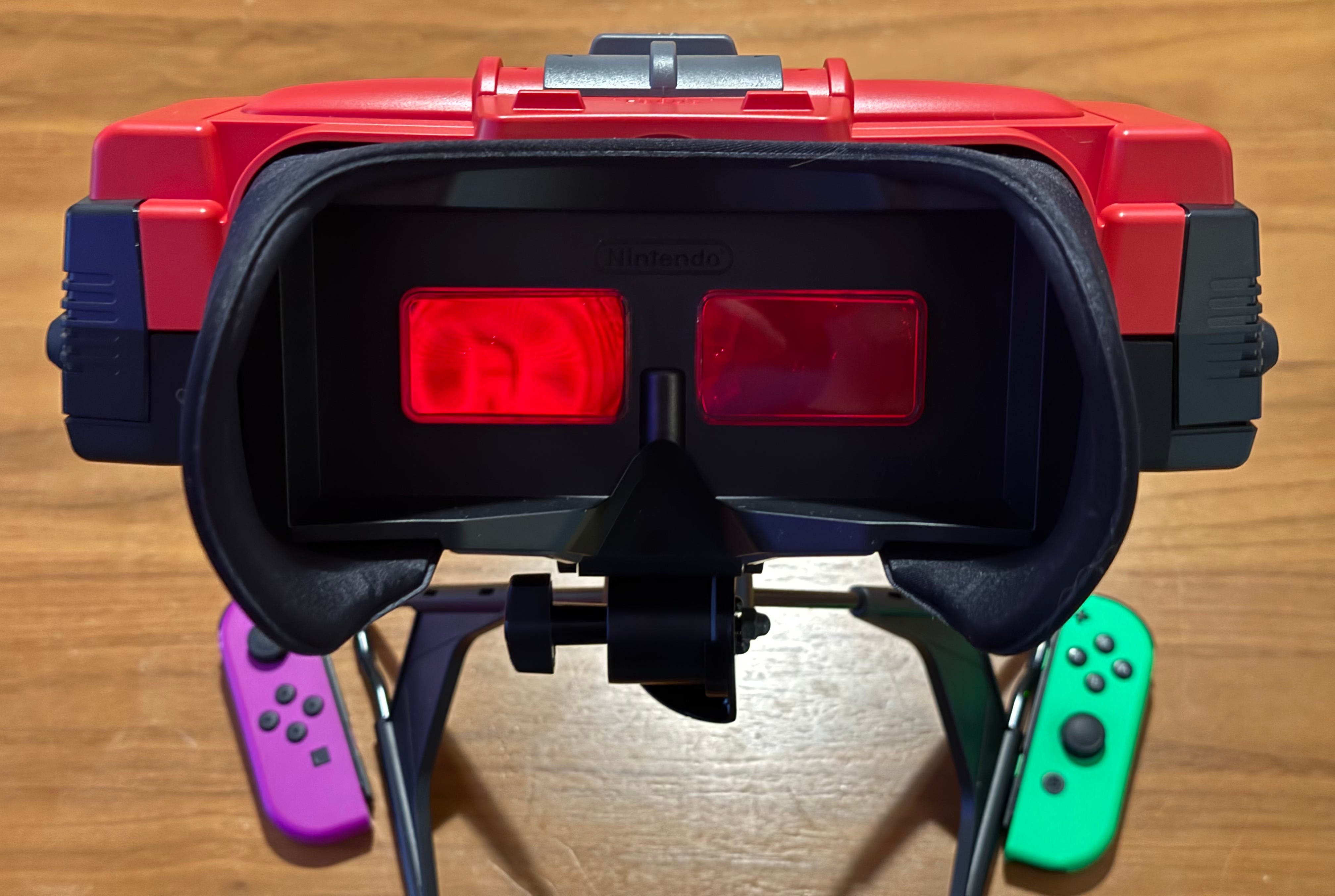
I finished playing some Virtual Boy Wario Land in stereoscopic 3D on my OLED Switch and popped my head out to look at my wife with pride.
“So how is this different from the Virtual Boy I bought you?” she asked.
I just stared at her.
She had bought me the original table-mounted VR system for my birthday last year. 15 feet away from me there’s a cartridge for Virtual Boy Wario Land playable in Nintendo VR from 1995. I could only answer her with honesty.
“This one is subscription-based,” I replied.
I don’t know how to describe the look she gave me in response other than disgusted love.

I had just spent almost $60 to upgrade my Nintendo Switch Online account to a Nintendo Switch Online + Expansion Pack plan in order to enjoy this Virtual Boy. Nintendo charges $80 per year for a family to access a collection of classic games.
The math means if I was exactly at the halfway point of my life at age 40 it would cost me about $3,200 (plus the initial hardware) to enable my family and I to play those classic games for the rest of my life.
Apple Arcade is $7 per month “with family sharing”. If I want to access Pac-Man and Tetris in the Retrocade I’ll need to keep paying that monthly fee. Put another way, both Apple and Nintendo locked the playing of classic games in VR to ongoing subscriptions. The biggest difference between Nintendo and Apple here is that Nintendo made it easy to switch save files between different members of the family on a single device while Apple has not.
For comparison purposes, GB Operator is $50 to keep Game Boy and Game Boy Advance games playable anywhere without a subscription and there’s the new SNES edition for $60 with more of the devices planned.
I can also point to the OLED displays of Vision Pro and my Switch OLED as providing the same true black backdrop for the rendering of classic games as well, but there’s one other similarity Nintendo and Apple share in common here when it comes to the decisions they’ve made around VR hardware.
Both Apple and Nintendo chose designs for VR technology that do not weigh down heads with battery. Meta shipped eight years of headsets that put that weight on the front of faces.
More to come on Virtual Boy.