Email With An Oculus Founder Building A Framework For Personal Computers People Want To Buy
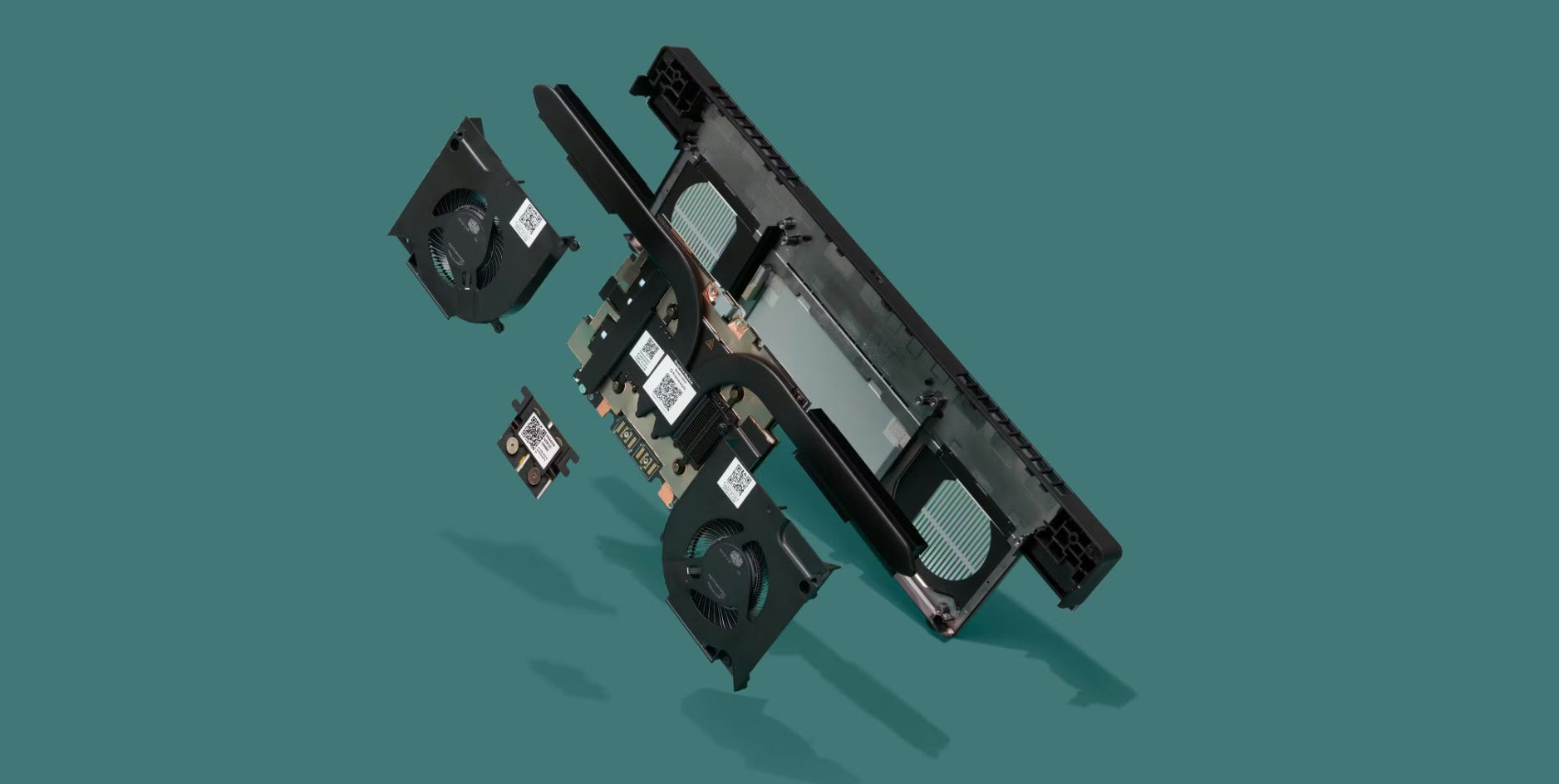
Meta needs a workable framework for the future of personal computers. Maybe Mark Zuckerberg should think about partnering with the Oculus founder making customizable laptops.
Last week I sent an email to Framework, the company Nirav Patel started after the Oculus founder left Facebook’s effort.
Today I received a reply. Here’s my email followed by his reply in full:
Hello Framework,
My name is Ian Hamilton, I’ve reported on VR for over a decade at the Orange County Register and UploadVR. I’m newly independent posting to a Substack already with dozens of paid subscribers after just a few days representing some of the most significant VR game studios and companies subscribing to my work.
I personally believe Nirav Patel and Framework have built exactly what Meta is missing in its strategy today. I believe I can point a finger at Patel’s departure being close to the launch of Oculus Quest and the development of Oculus Link as a moment when Meta definitively chose to push a closed platform rather than following the obvious path of truly open computing.
To put a finer point on it, last decade I constructed my first desktop PC from parts I bought and this decade I find myself configuring every type of Framework laptop on your website dreaming of something that would give me top tier VR experiences with more freedom than I had last decade. I’d like to configure it, if possible, to boot into Windows or Linux by holding a particular key.
It seems obvious to me I am saying something pretty fundamental about the need Framework is filling in the market, but I’ve also been largely alone here trying to shout these beliefs as a neutral journalist to a sea of buyers (and developers) who have been captured by Apple or Meta standalone systems. And meanwhile, it is very hard to reach the PC buyers to whom VR is currently only on the periphery of their decision-making, despite headsets like Bigscreen Beyond 2 and Steam Frame poised to be perfectly complementary to a top-end Framework laptop.
Would Nirav Patel be willing to comment on the record to a few specific questions, or reply to the overall thesis of this email directly?
Why did Nirav depart Facebook?
What does he see as the relationship between Framework and VR headsets?
The Reply From Framework Founder Nirav Patel
Why did Nirav depart Facebook?
On Quest specifically, I was one of the individuals driving it at the start, when we were navigating whether to partner with Samsung on a standalone VR headset or to commit to building ourselves. We eventually got the go-ahead to commit internally, though by that point we had already kicked off an internal prototype with Thundercomm, which eventually became the Oculus Santa Cruz prototype we demoed in 2016. Later, in my last ~year at Facebook, I put most of my time and energy into getting Oculus Quest 2 onto the roadmap, which was shockingly difficult despite how obvious it was in retrospect that it was necessary for it to be worth Facebook/Meta continuing investing in consumer VR at all.All of this is to say that what drove me out of Facebook wasn’t de-investment in PC VR or even the trend into closed platforms. It was actually a fundamental mismatch in belief in what our priorities should have been, and a feeling that I was wasting my time and energy on bureaucracy and trying to overcome organization politics. From 2012 when I first joined Oculus to 2019 when I left, my priority was maximizing iteration speed. VR was, and 14 years later still is, a category in which the fundamental use case that will stick and the audiences that will scale are unknown. In that environment, the priority should be to do closed-loop, audience-and-developer-involved iteration rapidly. Instead, we put years of time, the energy of thousands of engineers, and colossal sums of money into slow big bets that oftentimes moved at such a glacial pace that the product needed to be completely reset years into development before getting public learnings from it.
For many years running in Oculus and then in Facebook, there were also the competing camps of “VR is ready” and “VR is not ready”. Much of what we did end up shipping came out of the “VR is ready” camp wanting to rapidly market test (Gear VR, Oculus Go, Oculus Quest 1 and 2, Rift S), though much of the money, resources, and project cancellations mapped back into the “VR is not ready” camp. Although it might sound like I was in the “VR is ready” camp, I was actually agnostic and just wanted to ship anything we could ship.
What does he see as the relationship between Framework and VR headsets?
“All of this brings me to what makes Framework different than Oculus and Facebook. Fundamentally, we don’t enter categories where the use cases and audiences are still in flux. We choose categories where, not only are these known, but they are so mature that the business models around the category have evolved from innovation to extraction. Our opening then as a company is to go back into those mature categories and build products that actually map to what the customers in the space need out of the product, not what would make for the maximally capital extractive business model. That means a category like laptops is a great fit for our product strategy and business model. A category like VR headsets is not, yet.”